Parent Hub

Supporting Families Navigating Executive Function, Reading & Writing Challenges
At Anchor Literacy & Learning, we believe that when parents understand how their child learns, everything changes. This Parent Hub was created to provide clear, trustworthy information and practical guidance for families supporting children with dyslexia, ADHD and language-based learning challenges.
Whether you are just beginning to ask questions or have been navigating this journey for years, this space is here to support you.
You are not alone — and you don’t have to figure this out by yourself.
With the right support, every child can build the skills — and confidence — to thrive.
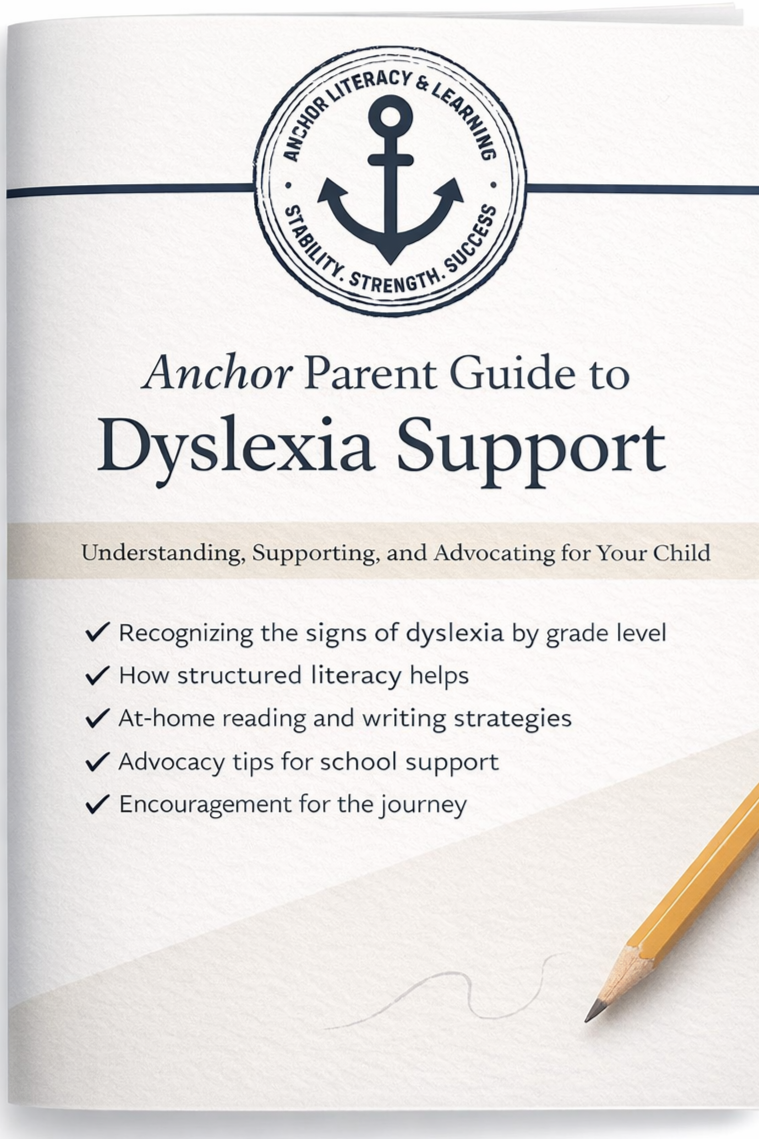
Free Parent Guide
Support Your Child with Dyslexia and ADHD— With Clarity and Confidence
If you’re unsure where to begin, this guide walks you through understanding dyslexia, the link between dyslexia and ADHD recognizing signs by grade level, and supporting reading and writing at home using structured literacy principles.
What’s Inside:
• Signs of dyslexia by grade level
• How structured literacy works
• At-home reading and writing strategies
• Advocacy tips for school support
• Encouragement for the journey
Understanding Dyslexia
Dyslexia is a language-based learning difference that primarily affects reading, spelling, and written expression. It is not related to intelligence, effort, or motivation. Children with dyslexia are often bright, creative thinkers who simply learn differently.
Common signs of dyslexia may include difficulty with:
Learning letter sounds and sound patterns
Reading accurately and fluently
Spelling, even familiar words
Writing complete, organized sentences
Remembering high-frequency words
Dyslexia looks different at different ages, and challenges can change as academic demands increase. Early identification and appropriate instruction make a significant difference.

Students with dyslexia benefit from structured literacy — an explicit, systematic, and multisensory approach to teaching reading and writing.
At Anchor, instruction focuses on:
Phonemic awareness and sound-symbol relationships
Decoding and encoding (reading and spelling)
Syllable patterns and word structure
Reading fluency and comprehension
Sentence structure and written expression
Structured literacy removes guessing and provides students with clear strategies they can apply independently. This approach builds both skill and confidence.ig Ideas, Real Impact.
How Structured Literacy Helps

Supporting Your Child at Home
Parents often ask how to help without increasing frustration. A few simple, consistent strategies can make a meaningful difference:
Encourage your child to slow down and apply strategies instead of guessing
Praise effort and progress, not just accuracy
Read aloud together to build vocabulary and comprehension
Keep practice short, focused, and positive
Communicate with teachers and tutors to stay aligned
Most importantly, remember that progress may be gradual — and that consistency matters more than speed.
Evaluations & Next Steps
If you suspect your child may have dyslexia or another language-based learning challenge, a comprehensive evaluation can provide clarity.
Parents often have questions about:
When to pursue an evaluation
The difference between school-based and private testing
Understanding evaluation reports
IEPs, 504 plans, and school supports
You do not have to navigate these decisions alone. Understanding your child’s learning profile allows you to advocate effectively and make informed choices.
Not Sure Where to Start?
If you have questions about your child’s reading or writing development, we are here to help.
Schedule a parent consultation to talk through concerns, discuss next steps, and determine whether Anchor’s services are the right fit for your child.